
Events
What is happening next in Cornell AI
Summits, demo days, and workshops across the Ithaca and Cornell Tech campuses — open to students, alumni, and the wider community.
Upcoming
On the calendar
Every published event still to come, soonest first. Dates and venues follow the Cornell AI events calendar.
Scheduling Algorithms for Quantum Switches
R. SRIKANT Electrical and Computer Engineering University of Illinois Urbana-Champaign Title: Scheduling Algorithms for Quantum Switches Abstract: We consider scheduling in a quantum switch with stochastic entanglement generation, finite quantum memories, and decoherence. The objective is to design a scheduling algorithm with polynomial-time computational complexity that stabilizes a nontrivial fraction of the capacity region. Scheduling in such a switch corresponds to finding a matching in a graph subject to additional constraints. We propose an LP-based policy, which finds a point in the matching polytope, which is further implemented using a randomized decomposition into matchings. The main challenge is that service over an edge is feasible only when entanglement is simultaneously available at both endpoint memories, so the effective service rates depend on the steady-state availability induced by the scheduling rule. To address this, we introduce a single-node reference Markov chain and derive lower bounds on achievable service rates in terms of the steady-state nonemptiness probabilities. We then use a Lyapunov drift argument to show that, whenever the request arrival rates lie within the resulting throughput region, the proposed algorithm stabilizes the request queues. We further analyze how the achievable throughput depends on entanglement generation rates, decoherence probabilities, and buffer sizes, and show that the throughput lower bound converges exponentially fast to its infinite-buffer limit as the memory size increases. Numerical results illustrate that the guaranteed throughput fraction is substantial for parameter regimes relevant to near-term quantum networking systems. Bio: R. Srikant is the director for the National Center for Supercomputing Applications (NCSA), a Grainger Distinguished Chair in Engineering, and Professor in the Department of Electrical and Computer Engineering and the Coordinated Science Lab, all at the University of Illinois Urbana-Champaign. His research interests include machine learning, applied probability, stochastic control, and communication networks. He is the recipient of the 2015 INFOCOM Achievement Award, the 2019 IEEE Koji Kobayashi Computers and Communications Award and the 2021 ACM SIGMETRICS Achievement Award. He has also received several Best Paper awards including the 2015 INFOCOM Best Paper Award, the 2017 Applied Probability Society Best Publication Award, and the 2017 WiOpt Best Paper award. He was the Editor-in-Chief of the IEEE/ACM Transactions on Networking from 2013-2017 and is currently an Area Editor for the Mathematics of Operations Research. THIS TALK IS CO-SPONSORED BY THE DATA SCIENCE DISTINGUISHED LECTURE SERIES AND THE ORIE COLLOQUIUM
Event details
ORIE Colloquium: R. Srikant (Illinois)
Scheduling Algorithms for Quantum Switches We consider scheduling in a quantum switch with stochastic entanglement generation, finite quantum memories, and decoherence. The objective is to design a scheduling algorithm with polynomial-time computational complexity that stabilizes a nontrivial fraction of the capacity region. Scheduling in such a switch corresponds to finding a matching in a graph subject to additional constraints. We propose an LP-based policy, which finds a point in the matching polytope, which is further implemented using a randomized decomposition into matchings. The main challenge is that service over an edge is feasible only when entanglement is simultaneously available at both endpoint memories, so the effective service rates depend on the steady-state availability induced by the scheduling rule. To address this, we introduce a single-node reference Markov chain and derive lower bounds on achievable service rates in terms of the steady-state nonemptiness probabilities. We then use a Lyapunov drift argument to show that, whenever the request arrival rates lie within the resulting throughput region, the proposed algorithm stabilizes the request queues. We further analyze how the achievable throughput depends on entanglement generation rates, decoherence probabilities, and buffer sizes, and show that the throughput lower bound converges exponentially fast to its infinite-buffer limit as the memory size increases. Numerical results illustrate that the guaranteed throughput fraction is substantial for parameter regimes relevant to near-term quantum networking systems. Bio: R. Srikant is the director for the National Center for Supercomputing Applications, a Grainger Distinguished Chair in Engineering, and professor in the Department of Electrical and Computer Engineering and the Coordinated Science Lab, all at the University of Illinois Urbana-Champaign. His research interests include machine learning, applied probability, stochastic control, and communication networks. He is the recipient of the 2015 INFOCOM Achievement Award, the 2019 IEEE Koji Kobayashi Computers and Communications Award and the 2021 ACM SIGMETRICS Achievement Award. He has also received several Best Paper awards including the 2015 INFOCOM Best Paper Award, the 2017 Applied Probability Society Best Publication Award, and the 2017 WiOpt Best Paper award. He was the Editor-in-Chief of the IEEE/ACM Transactions on Networking from 2013-2017 and is currently an Area Editor for the Mathematics of Operations Research. This talk is co-sponsored by the Data Science Distinguished Lecture Series and the ORIE Colloquium.
Event details
Human-Centered GenAI for Teaching and Learning
We invite instructors across disciplines to join us for a workshop session on using GenAI in their courses. We will share guidelines and inspirations for developing assignments that incorporate GenAI and explore what students need to know about responsible and effective GenAI use. In the session we will cover key design principles that support successful GenAI integration in course assignments, sharing a framework for thoughtful, human-centered implementation. Participants will have the opportunity to work through practical use case examples and draft their own AI-enhanced activities taking advantage of Cornell-specific GenAI resources, tools, and capabilities currently available to faculty and students. Register for Wednesday, September 2, 2026, from 2:15-3:30 p.m., in person.Register for Thursday, September 3, 2026, from 1:15-2:30 p.m., in person.For more information, check out CTI's upcoming events.
Event details
ORIE Colloquium: Eric Balkanski (Columbia)
Online Selection via Linear Programming Secretary problems are a fundamental family of online selection problems in which candidates arrive in random order and irrevocable accept-or-reject decisions must be made. In this talk, I will present recent progress on three secretary problems: knapsack secretaries, secretaries with predictions, and truthful secretaries. Our results are obtained using a common two-step approach: we first reduce the original cardinal problem to an ordinal one and then formulate it as a linear program. For the first step, I will present a recent technical tool introduced by Gravin, Sun, and Tang, called order-statistics indistinguishable distributions, which can be used to show that there is no loss in the cardinal-to-ordinal reduction. For the second step, we formulate each ordinal problem as a novel linear program. For knapsack secretaries, constant competitive ratios are known, but it was open whether a 1/e competitive ratio is achievable. We show that 1/e is not achievable and give a new algorithm that improves the best-known competitive ratio. For secretaries with predictions, multiple prediction models have been proposed. We present a flexible linear programming framework that captures existing prediction models and use it to obtain improved algorithms and impossibility results, which are in some cases optimal. For truthful secretaries, the best-known truthful mechanism is ¼-competitive, and we show that ¼ is tight for a broad family of mechanisms. Joint work with Jason Chatzitheodorou, Dimitris Fotakis, Vasilis Gkatzelis, Xizhi Tan, Thanos Tolias, David Yang, and Cherlin Zhu. Bio: Eric Balkanski is an associate professor in the Department of Industrial Engineering and Operations Research at Columbia University, affiliated with the Data Science Institute. His research focuses on approximation algorithms for combinatorial optimization problems under information limitations. He studies two main sources of such limitations: uncertainty about the future, as captured by online algorithms, and strategic behavior by agents, as captured by mechanism design. Balkanski received an Exemplary Theory Track Paper Award at the 2024 ACM Conference on Economics and Computation. Balkanski completed his Ph.D. in computer science from Harvard University, where he was advised by Yaron Singer; his thesis received an ACM SIGecom Doctoral Dissertation Honorable Mention. He also co-founded Robust Intelligence, an AI security startup that was acquired by Cisco.
Event details
Braudy & Manker Workshop on Business Ethics in Engineering
Apply to participate The Sidney & Ann Braudy and Louis & Edith Manker Workshop on Business Ethics in Engineering is a unique interdisciplinary event, bringing together faculty and advanced students from engineering, business, law, and more for an evening of discussion on ethical and social issues raised through the business of engineering. The workshop is free for all accepted participants and includes a catered dinner. For participants coming from Cornell Tech and other Cornell campuses outside of Ithaca, a limited number of guest rooms at the Statler Hotel and funds for reasonable travel expenses will be provided. This year, the theme is Artificial Intelligence and the Debts of Computing. While there have been many innovations in computing that have been called “AI” over the years, the public releases of OpenAI’s DALL-E (2021) and ChatGPT (2022) have redefined our understanding of what computers can do. As a slew of new AI products has appeared, there is much excitement—and trepidation—about how these tools might transform our businesses, our institutions, and our personal lives. At the same time, prominent scholars and activists have argued that computing as an industry has accumulated a series of metaphorical debts through the costs these technologies have to the economy, the environment, and society. Computer scientist and sustainability scholar Christoph Becker has gone so far as to say that “in its current form, computing is… insolvent: It is incapable of paying back the debts it owes to this planet and its societies.” This workshop will engage with the ethical and social issues raised by the business of AI development, and how these debts might be mitigated or repaid. Questions we may consider include: When should AI replace vs. enhance human labor?Is AI an environmentally sustainable technology?How might AI improve or undermine human connection?Discussion will be structured through a simulation game. Participants will take on the role of a team at an AI startup, and grapple with a series of ethically challenging questions that arise in the development, maintenance, and use of an AI product. Each team’s choices will influence how the scenario unfolds, creating a series of unique case studies. Eligibility The workshop is open to Cornell students in the following programs of study: M.Eng.M.B.A.J.D.Senior Undergraduate, Graduate, and Professional programs in relevant disciplinesWorkshop Agenda 4:30–5:00 PM — Registration & Networking5:00–5:30 PM — Keynote Lecture5:30–5:40 PM — Break with refreshments5:40–6:40 PM — Breakout discussion / simulation game6:40–7:00 PM — Discussion7:00–9:00 PM — DinnerApply to participate Image: Labour/Resources by Clarote & AI4Media, https://betterimagesofai.org/images?artist=Clarote&title=Labour%2FResources, CC-BY 4.0.
Event details
BME7900 Seminar: Aditya Johri (George Mason)
Designing the Future of Engineering Education through Generative Artificial Intelligence Recent public narratives about artificial intelligence—ranging from widespread layoffs attributed to automation, to startups hiring AI agents as “employees,” to growing skepticism among students about the value of college degrees—underscore a moment of profound uncertainty for higher education. While technological hype is not new, engineering education now faces a unique convergence of forces that demand renewed attention. Against this backdrop, I explore critical questions for the future of engineering education: how curricula, assessment, and learning environments might evolve; when and how AI should be taught and used; and what distinctive value higher education can and should offer in an AI-mediated world. I argue that three interrelated factors make the current moment particularly consequential. First, the techno-cultural materiality of GenAI where it is deeply embedded in everyday sociomaterial practices. Second, the socio-cognitive affordances of GenAI which reflect a qualitative shift in computational capabilities mimicking highly human cognitive functions and raising foundational questions about knowledge, expertise, and learning. Third, the economic reality and pressures shaping higher education—student debt, employability concerns, and institutional financial constraints—that have intensified the perceived power of AI by aligning education ever more closely with workforce preparation. Drawing on secondary data, recent studies, and classroom-based research, the talk examines how students and faculty currently engage with generative AI. Overall, evidence shows widespread student use across cognitively complex tasks, persistent misconceptions about AI’s capabilities, and a tension between efficiency gains and reduced learning effort. Faculty adoption remains comparatively limited, shaped by unfamiliarity, ambivalence, and weak institutional guidance. Bio: Aditya Johri is a professor of information sciences and technology and Dr. Lawrence Cranberg Endowed Research Fellow in the College of Engineering & Computing at George Mason University. He studies how technology shapes learning across formal and informal settings and the ethical implications of using technology. He publishes broadly in the fields of engineering and computing education, and educational technology. His research has been recognized with several best paper awards and his edited volumes Cambridge Handbook of Engineering Education Research (CHEER) and International Handbook of Engineering Education Research received the Best Book Awards from Division I of AERA in 2015 and 2024, respectively. He served as a Fulbright-Nokia Distinguished Chair in ICT at Aalto University, Finland (2021) and he is a past recipient of the NSF Early Career Award (2009), the University Teaching Excellence Award (2002) and the Mentoring Excellence Award (2022) for undergraduate research at George Mason University. He was awarded a Ph.D. in learning sciences and technology design (2007) from Stanford University.
Event details
Ask the Statisticians: AI in Scientific Research
Join us for a discussion on an exploration of the current benefits and pitfalls of AI usage in scientific research. The capabilities of AI has dramatically increased over the past year. This session will provide a space to discuss innovative ways researchers across departments are integrating AI into their statistical workflows, as well as a space to discuss concerns about the best ways to maintain the scientific rigor and reproducibility in the process. We will send a survey to registrants before this session with questions on their current AI usage and questions they are currently facing regarding the usage of AI in scientific research. You will also be able to submit questions during the discussion. Register Now
Event details
Cornell at Climate Week NYC 2026
Cornell researchers return to New York City for Climate Week NYC 2026 from September 20-27, joining global leaders to advance bold, science-based solutions to pressing sustainability challenges. Cornell Atkinson Center for Sustainability, The 2030 Project: A Cornell Climate Initiative, and campus partners will host conversations exploring emerging ideas and innovations at the intersection of science, technology, policy, and sustainability. From AI and climate finance to critical minerals, nuclear energy, and circularity, Cornell experts will connect research with the NGOs, corporations, government leaders, policymakers working to turn ideas into impact. View our Climate Week NYC Agenda of Events:
Event details
ORIE Colloquium: Sarah Dean (Cornell CS)
Learning and decision-making in the presence of observer effects In many modern engineering domains, the presence of "observer effects" creates interdependence between measurement and underlying state. In such settings, actions both impact the system state and determine what information about it is observed. Accounting for this dual role is crucial for designing reliable algorithms for learning and control, for applications ranging from robotics to personalized recommendation systems. In this talk, I will discuss recent work in the setting of partially observed dynamical systems with linear state transitions and bilinear observations. Inspired by the rich line of work on learning and control for linear systems, our goal is to understand how much (and which) data is necessary for reliable decision-making. First, I will discuss learning from observations when the dynamics are unknown and provide finite data error bounds and a sample complexity analysis for inputs chosen according to a simple random design. Second, we will consider the optimal control problem with the objective of minimizing a quadratic cost. Despite the similarity to standard linear quadratic Gaussian (LQG) control, neither does the separation principle (SP) hold, nor is the optimal policy affine in the estimated state. Under certain conditions, the SP-based controller locally maximizes the cost instead of minimizing it, and instability can result from a loss of observability. By accounting for how the actions impact state estimation, I will introduce an MPC controller based on receding horizon planning in the belief space. I will conclude with a discussion of open questions on control design and end-to-end guarantees. Based on joint work with Yahya Sattar, Sunmook Choi, Yassir Jedra, Leo Maynard-Zhang, and Maryam Fazel. Bio: Sarah Dean is an assistant professor of computer science at Cornell University. She studies the interplay between optimization, machine learning, and dynamics in real-world systems. Her research focuses on understanding the fundamentals of data-driven methods for control and decision-making, inspired by applications ranging from robotics to recommendation systems. She completed her postdoctoral research at the University of Washington and earned her M.S. and Ph.D. in electrical engineering and computer science at the University of California, Berkeley. Dean received her B.S.E. in electrical engineering and mathematics from the University of Pennsylvania.
Event details
Exploring the Ethics of AI in Community-Engaged Learning
What is our role as educators and facilitators when we enact the principles of community partnership in relation to emergent guiding principles for critical AI literacy and education? Join us in this seminar to discuss the ethical questions and pedagogical conundrums in practice at the intersection of community-engaged and service-learning. In our first session, we will explore foundational questions and guiding principles. Please register to receive optional pre-reading. In our second session, faculty and/or community partners will report out on how they are grappling with the issues in practice. The sessions are co-sponsored by the Einhorn Center, the Center for Teaching Innovation, and Cornell’s Global AI Initiative. Register to receive optional readings. Register for Tuesday, October 6 and October 13, 2026, from 2:00–3:00 p.m., hybrid Learn more CTI Fall events here!
Event details
Language Resource Center Speaker Series - Aditya Vashistha - AI Safety for the Global Majority
"AI Safety for the Global Majority" Aditya Vashistha Assistant Professor of Information Science and Director of the Cornell Global AI Initiative, Cornell University AI safety is often framed around alignment failures, existential risk, or misuse by powerful actors. Yet for much of the world, the risks of AI are far more immediate: misrepresentation, exclusion, stereotyping, and the erosion of dignity. These harms disproportionately affect communities that are already marginalized — including people with disabilities and those in non-Western cultural contexts. In this talk, I argue that current approaches to AI safety are limited not only in scope but in standpoint. When safety is defined from dominant social and geographic positions, the harms that matter most to marginalized communities become invisible, anecdotal, or secondary. Drawing on case studies from my work with people with disabilities in the US and India, I show how AI systems both promise expanded access and simultaneously reproduce cultural bias, ableism, and structural inequities. I conclude by outlining pathways toward a globally grounded approach to AI safety — one that treats representation, cultural context, and participatory governance as core safety challenges rather than peripheral concerns. Bio: Dr. Aditya Vashistha is an Assistant Professor of Information Science at Cornell University, where he directs the Cornell Global AI Initiative, a university-wide effort to integrate global perspectives into the design, evaluation, and governance of AI. His research focuses on building and studying AI systems that advance equity for historically marginalized communities, particularly across South Asia and Sub-Saharan Africa. His work has led to widely deployed systems impacting over 300,000 people and has received multiple best paper awards. He is the recipient of the Facebook Access Innovation Prize, Google and Microsoft Faculty Awards, and Cornell's President's and Provost's Faculty Award for Excellence in Research, Teaching, and Service. He received his Ph.D. in Computer Science from the University of Washington. This event will be held in person in G25 Stimson and will also be streamed live over Zoom (registration required). Join us at the LRC or on Zoom. The event is free and open to the public.
Event details

Distinguished Raymond G. Thorpe Lecture: John Murphy (U.S. District Judge)
How a Cornell Chemical Engineer Became a Federal Judge, and the Lessons Learned Along the Way John Murphy ‘99, a United States District Judge for the Eastern District of Pennsylvania, will trace his path from Olin Hall to the halls of justice. He will cover topics like: (i) how the law works (from the perspective of an engineer); (ii) careers in law; (iii) unexpected connections among the fields of law, science, and engineering; (iv) some of the challenges facing our legal system at the intersection of law and science; and, of course, (v) why an education in chemical engineering really does prepare you for anything. He will also share insights from his time in chemical engineering that have carried him over the years, such as the role of mentorship, the bedrock of ethical conduct, and how serendipity favors the prepared mind. After Cornell, but before turning to a legal career, Judge Murphy followed the path of his mentors at Cornell, obtaining a Ph.D. in chemical engineering at Caltech, where he was an NSF fellow. There, he worked in the laboratory of Professor Mark E. Davis on a thesis entitled “Methods for Collection and Processing of Gene Expression Data.” He was also chair of Caltech’s Graduate Review Board, and obtained a patent on his work, two experiences that got him thinking about the law. From there, he attended Harvard Law School, where he was editor-in-chief of the Harvard Journal of Law and Technology, and then served as a clerk for Chief Judge Kimberly A. Moore of the U.S. Court of Appeals for the Federal Circuit. Before being appointed to the court, Judge Murphy was a partner at the law firm of Baker & Hostetler in Philadelphia, where he litigated patent, copyright, trademark, and trade secret disputes. Now, outside of the courtroom, Judge Murphy serves on the Committee on Codes of Conduct of the Judicial Conference of the United States and the Subcommittee on Artificial Intelligence. He also teaches at Villanova Law School and Rutgers Law School and is co-author of the last three editions of the popular law-school casebook Patent Litigation & Strategy.
Event details
REAP Workshop Fall 2026
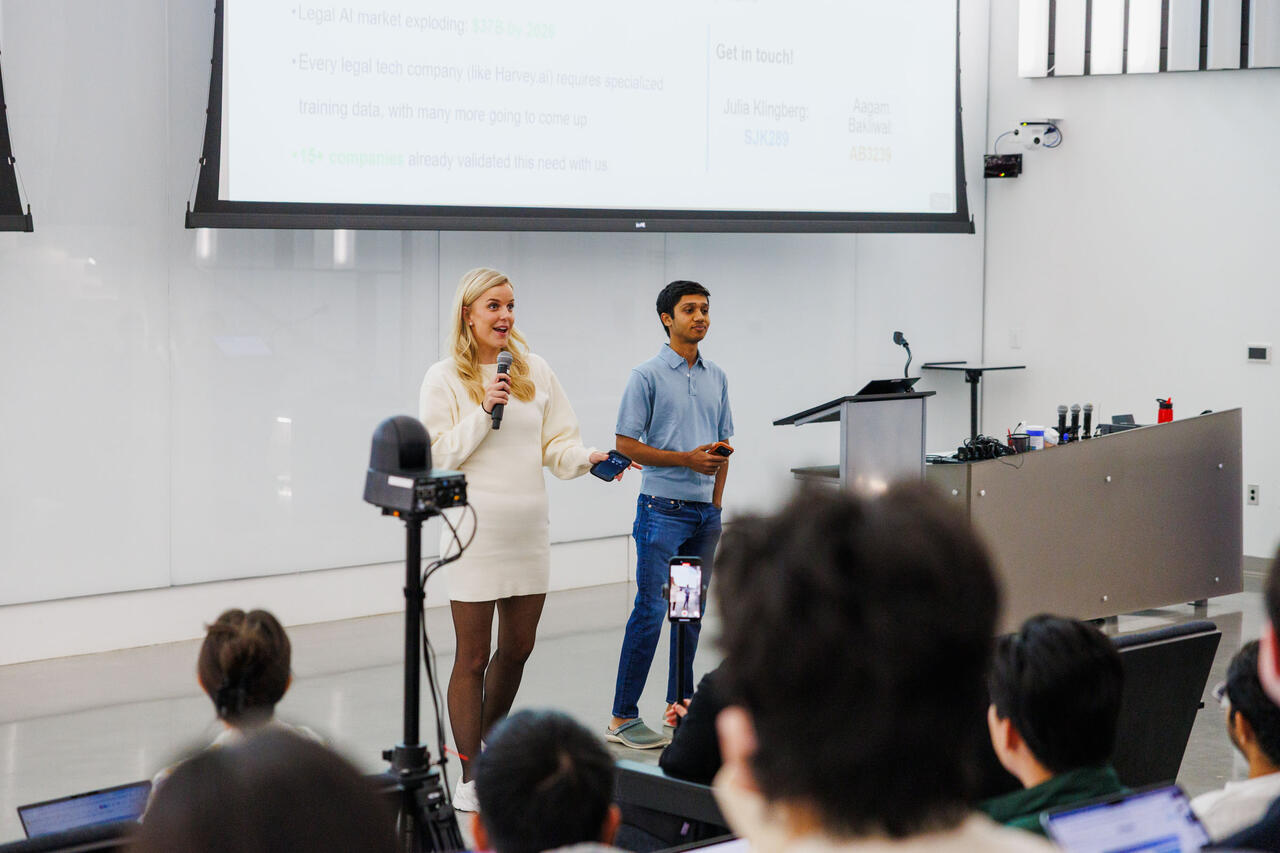
Yu (Charlie) Sun, Graduate Student in the Yu Lab, attended the Machine Learning for Mass Spectrometry Data Analysis short course, hosted by the American Society for Mass Spectrometry on May 30–31, 2026, in San Diego, CA as a recipient of the Weill Institute REAP award. Objective The post-workshop presentation will demonstrate how core machine learning concepts introduced in the workshop can be applied to a real mass spectrometry data analysis problem. The goal is to reinforce data literacy, highlight best practices, and show how to critically interpret machine learning results rather than to develop advanced models. Target Audience This presentation is intended for mass spectrometry researchers seeking a deeper understanding of fundamental machine learning concepts, commonly used algorithms, and typical pitfalls. Emphasis will be placed on developing the ability to critically evaluate machine learning results in the scientific literature and to apply these approaches responsibly and appropriately in their own mass spectrometry studies. Presentation Content The presentation will focus on a concrete, well-defined mass spectrometry use case (e.g., peptide identification confidence, sample classification, or feature selection in proteomics). It will include: Problem definition – the biological or analytical question and why machine learning is appropriate.Data overview – structure of the mass spectrometry data, preprocessing steps, and common challenges (missing values, batch effects, dimensionality).Machine learning approach – a simple, standard method covered in the workshop (e.g., regression, classification, or clustering), with emphasis on model assumptions and parameter choices.Results and interpretation – performance metrics, visualization of outputs, and biological relevance.Limitations – potential overfitting, data leakage, and when expert consultation would be necessary. Outcome By the end of the presentation, attendees should understand how basic machine learning tools integrate into mass spectrometry data analysis workflows and feel more confident interpreting and applying these methods in practice.
Event details

BME7900 Seminar: Antonio Fernandez-Ruiz (Cornell)
Novel neural interfaces for large-scale, long-term recordings and manipulation in behaving animals A central challenge in neuroscience is to understand how neuronal activity across brain areas generates complex behaviors. Recent advances in implantable bioelectronics have enabled simultaneous recordings of hundreds of neurons in behaving animals. However, existing neural interfaces often remain bulky, constraining animal behavior, and rigid recording electrodes do not allow recording the same neurons over multiple days due to tissue micromovements, limiting the study of learning and memory mechanisms. In this talk, I will present our recently developed implantable platforms for large-scale, long-term neural recording and manipulation in rodents and other animals. We created parylene-C–based, high-density flexible electrodes using a multilayer design and micro-patterned conducting polymers, achieving a higher density-to-volume ratio than existing silicon probes. These devices allow stably tracking hundreds of the same neurons for months, overcoming the limitations of rigid recording electrodes. We further engineered a wireless neural interface enabling untethered recording and closed-loop modulation in freely behaving small animals. Direct under-chip bonding of flexible probes yielded a compact system weighing under 1.2 g. Integrated onboard sensors captured behaviorally relevant variables, including locomotion, vocalization, and pupil dynamics. An AI-driven embedded signal-processing pipeline detected neural and behavioral biomarkers in real time to trigger targeted interventions. Together, these technologies have enabled us to investigate neural mechanisms of behavior under conditions that were previously inaccessible. Bio: Antonio Fernandez-Ruiz is an associate professor at the Department of Neurobiology and Behavior in Cornell University. He studied physics and biology at the Universities of Sevilla and Madrid, in Spain. He completed his Ph.D. at the University of Madrid, where he developed machine learning methods to study the biophysical basis of brain dynamics. He then moved to New York University to work as a postdoctoral fellow in the laboratory of Gyorgy Buzsaki. His research focused on the neural circuit mechanisms of learning and memory in rodents. His work elucidated how the temporal coordination of excitatory and inhibitory inputs mediates communication between brain areas and supports learning. He developed a novel approach to causally probe the role of specific patterns of neural activity in behavior and used it to demonstrate the key function of neuronal sequence in memory formation. The overarching mission of his lab at Cornell is to understand how neuronal dynamics in distributed brain circuits support complex cognitive functions and how small imbalances can lead to pathological states. His group investigates the algorithmic and mechanistic underpinnings of learning, memory and decision making in health and disease at the computational, circuit, and cellular levels. Work from his laboratory elucidated how cellular heterogeneity and circuit dynamics contribute to the computational capabilities of hippocampal and cortical structures, found novel circuit for the associative and predictive functions of memory and discovered how the temporal organization of brain dynamics in sleep contribute to memory consolidation and integration. They also develop novel technology for a more precise interrogation of neural circuit activity in health and disease. Antonio is a Pew, Klingenstein and Sloan Scholar, and the recipient of the Gruber International Research Award in Neuroscience (SfN), the Blavatnik Award for Young Scientists in the Life Sciences, the Freedman Prize for Exceptional Basic Research (BBRF), the New Innovator Award (NIH) and the MIND Prize (PSF).
Event details

2026 Cornell Food Hackathon
The annual Cornell Food Hackathon convenes 150 undergraduate and graduate students from diverse disciplines — including food science, business, nutrition, engineering, design, and data science — to collaboratively explore the future of food innovation. Working in cross-functional teams, students simulate real-world startup environments where they are challenged to integrate product development, consumer insights, go-to-market strategy, and technical feasibility. Their mission at the 2026 event: to reimagine consumer health and wellness and propose bold, next-generation product innovations. Through rapid ideation, prototyping, and pitching, students not only develop functional concepts but also gain an entrepreneurial mindset and systems-thinking skills essential for leading the future of food. This event offers a unique opportunity for students to work side-by-side with peers in food, ag, chemistry, nutrition, health, design, operations, business, engineering, and more. Industry mentors are also present, providing feedback to the competing interdisciplinary teams of students and great career networking opportunities. This year's Cornell Food Hackathon will kick off at 4 pm on Friday, November 6, 2026. The event runs until 8 pm on Nov 6; 9 am – 9 pm on Nov 7, & 9 am – 3 pm on Nov 8.
Event details
Interpretable Machine Learning
Some predictive machine learning models provide interpretable results, while others are black boxes. In either case, it’s important to know how and why a model made the predictions it did. This workshop will introduce tools for interpreting machine learning models and explaining their predictions. Topics covered include: Inherently interpretable models (linear and logistic regression, decision trees)Feature importanceIndividual conditional expectation (ICE) and partial dependence (PDP) plotsLocal surrogate models (LIME)Shapley additive explanations (SHAP) All methods will be discussed at an approachable, non-technical level and demonstrated using worked examples in R and Python. Register Now
Event details
Hype Springs Eternal: AI, Memory, and War
In 1958, the Office of Naval Research unveiled the Perceptron, the first neural network for artificial intelligence, created by Cornell psychologist Frank Rosenblatt. The Navy expected it to read and write within a year. Nearly seventy years later, the Pentagon is again betting on AI to revolutionize war, while industry leaders promise that recursive self-improvement and superintelligence are just around the corner. Why does the military accept exceptional expectations about AI despite repeated disappointment? Part of the answer is rethinking technology hype. Because we cannot fact-check the future, hype is better understood as performative discourse than as exaggeration. This expectant, dramatic, and imminent discourse can be studied in real time, regardless of whether it proves true. Part of the answer is remembering forgetfulness. Learning supposedly tempers expectations, but forgetting can reset them. I trace AI hype from Dartmouth and DARPA through the Lighthill Report, Strategic Computing, and the Third Offset. I show that hype runs on both hope and fear, and that the exceptional expectations it evokes cycle as technical performance and forgetting interact. About the speaker Frank L. Smith III is the director of the Cyber and Innovation Policy Institute (CIPI), part of the Strategic and Operational Research Department in the Center for Naval Warfare Studies at the U.S. Naval War College. Smith was previously a senior lecturer in the Department of Government and International Relations at the University of Sydney. His interdisciplinary research examines the relationship between emerging technology and national security, particularly in cyberspace. He has a Ph.D. in political science and a B.S. in biological chemistry, both from the University of Chicago. Host Reppy Institute for Peace and Conflict Studies, part of the Einaudi Center for International Studies
Event details